Skip to content

Try “pit furnace”, “Fibrothal” or “electrification”.

    Case study · Retrofit

    Retrofitting a pit furnace using a Fibrothal based heating system

    An automotive components manufacturer's pit furnace re-lined with a Fibrothal heating system and ROB elements designed for line voltage, so the power transformer and its losses could go.

    Furnace:
    Pit furnace
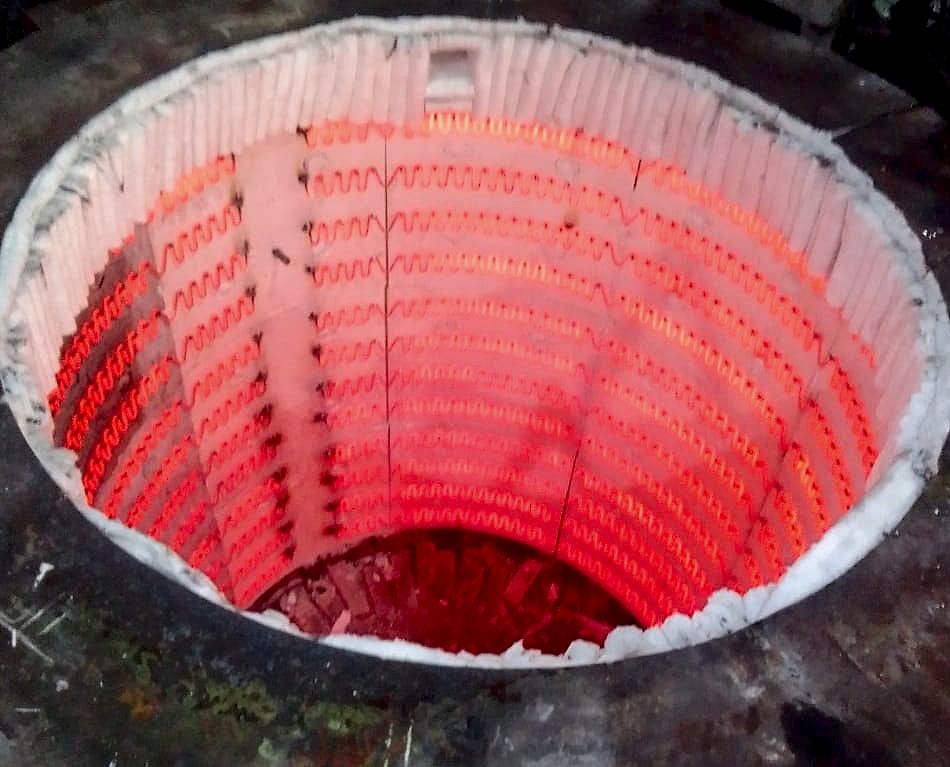
    The furnace pit glowing at operating temperature after the retrofit

    Results

    What the project delivered.

    Per batch
    1,200 kg
    Rated power
    115 kW
    Operating / max temperature
    920 / 980 °C
    Power transformers needed
    1 → 0

    The heating elements were redesigned for line voltage, so the step-down transformer and its copper, hysteresis and eddy-current losses, typically 2.5–3%, are gone, along with its oil, dielectric and capacitor-bank maintenance.

    The customer rated both the equipment's performance and our after-sales support as satisfactory in a signed performance certificate (March 2026).

    Overview

    The project.

    Case study · Retrofit

    What we did

    The furnace ran on conventional strip-type elements fed through a step-down power transformer. The brief had two parts: take that inductive load out of the system, and replace the heating system with something more efficient.

    We completely retrofitted the furnace with a Fibrothal heating system, a pre-shaped insulating hot face with ROB wire elements built in, on a ceramic fibre blanket back-up, and designed the elements to run at line voltage.

    Why take the transformer out

    A power transformer is an inductive load. It adds copper, hysteresis and eddy-current losses of roughly 2.5–3%, and it needs its own upkeep: oil filtration, dielectric-strength and acidity tests, and capacitor-bank checks. Designing the elements for line voltage removes all of it.

    • CustomerAutomotive components manufacturer
    • EquipmentPit furnace
    • ProcessHardening, carburising & quenching
    • Capacity1,200 kg per batch
    • Rated power115 kW
    • Operating / max temperature920 °C / 980 °C
    • Heating systemFibrothal hot face with ROB elements
    • Ordered / commissionedFebruary 2025 / 2026
    Scope of work

    How it was done.

    1. 01

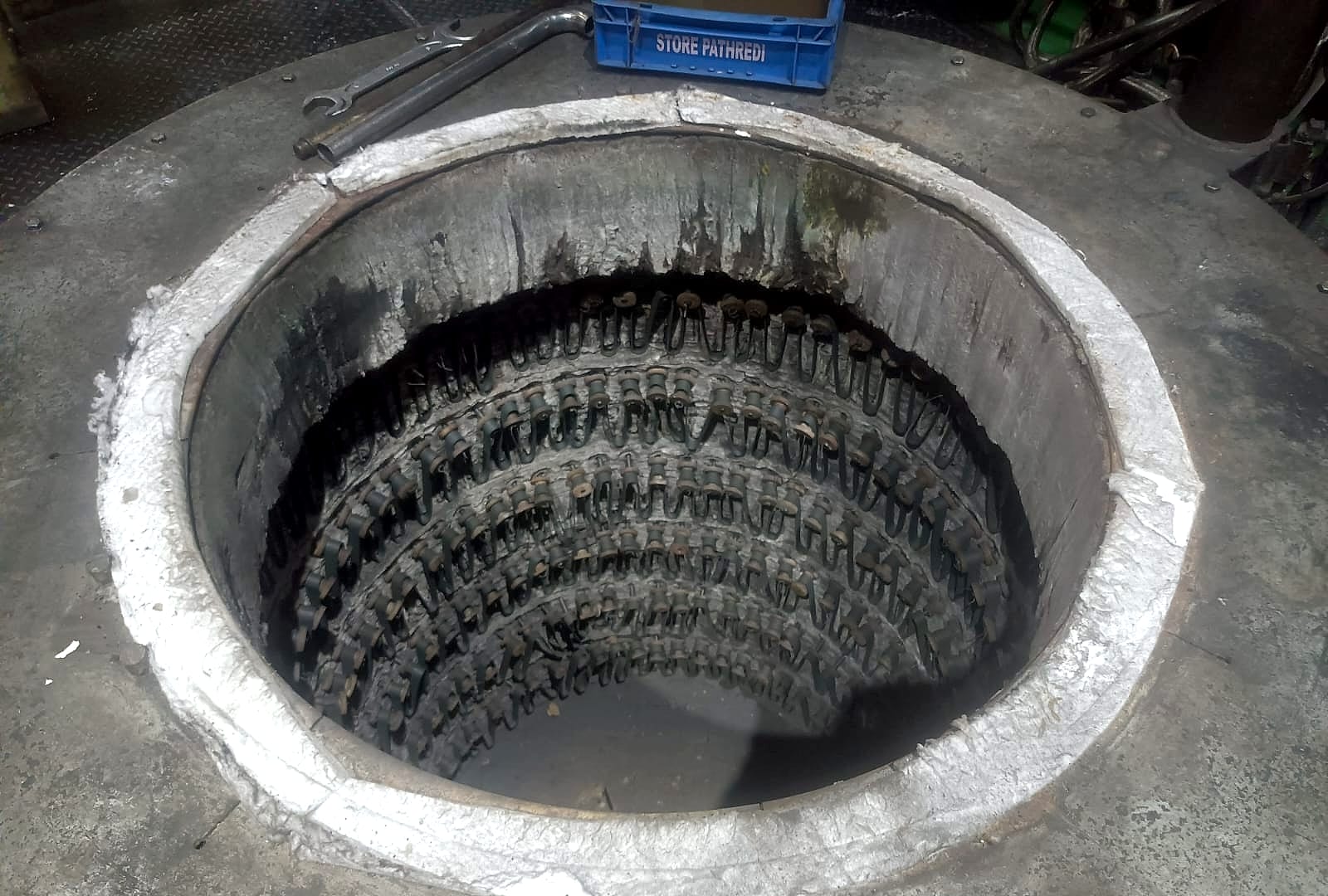
      The furnace as found

      Strip-type heating elements lining the pit, on a conventional lining, fed through a step-down power transformer.

      The furnace pit before the retrofit, lined with old strip-type heating elements
      Before
    2. 02

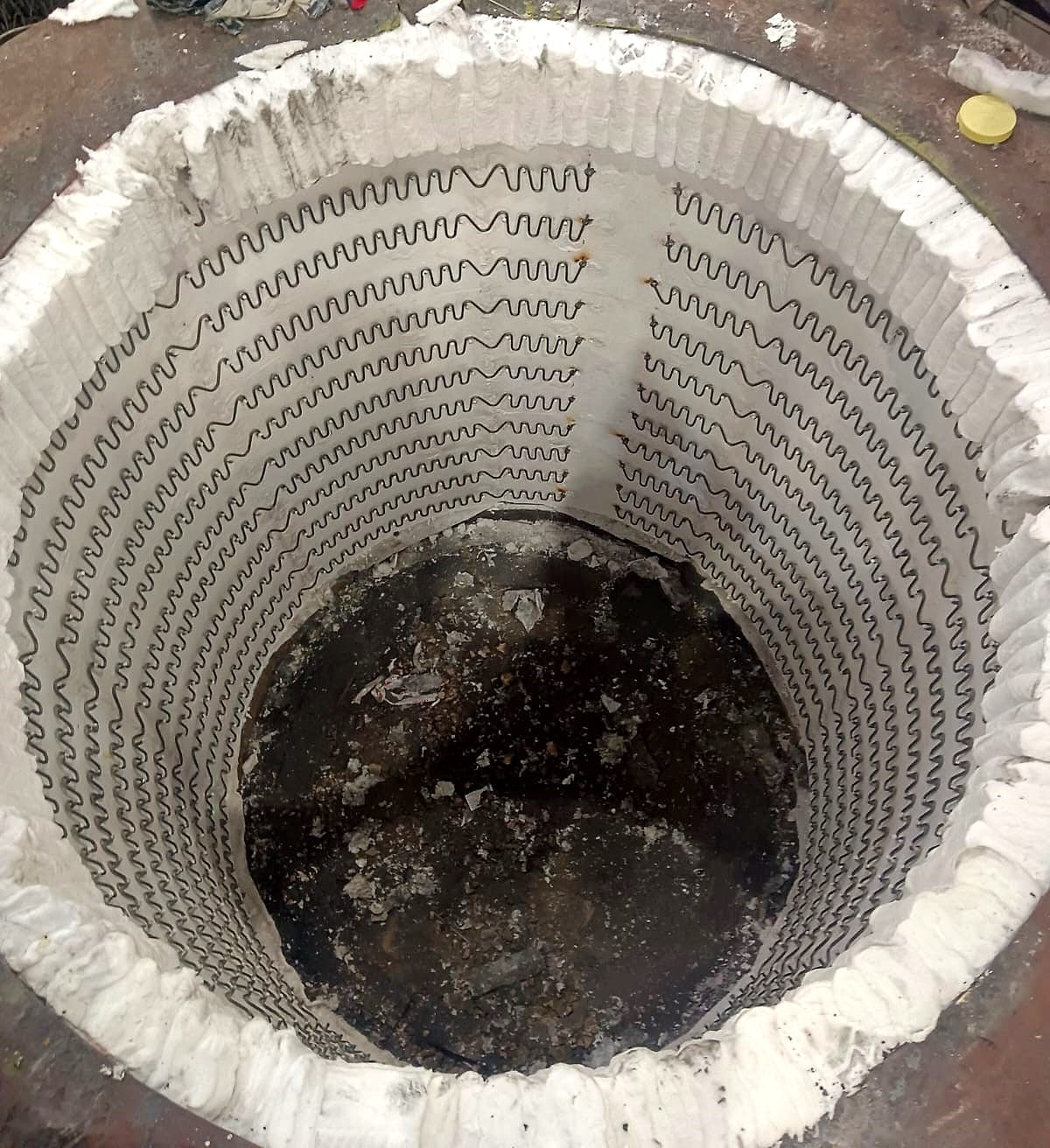
      Back-up insulation

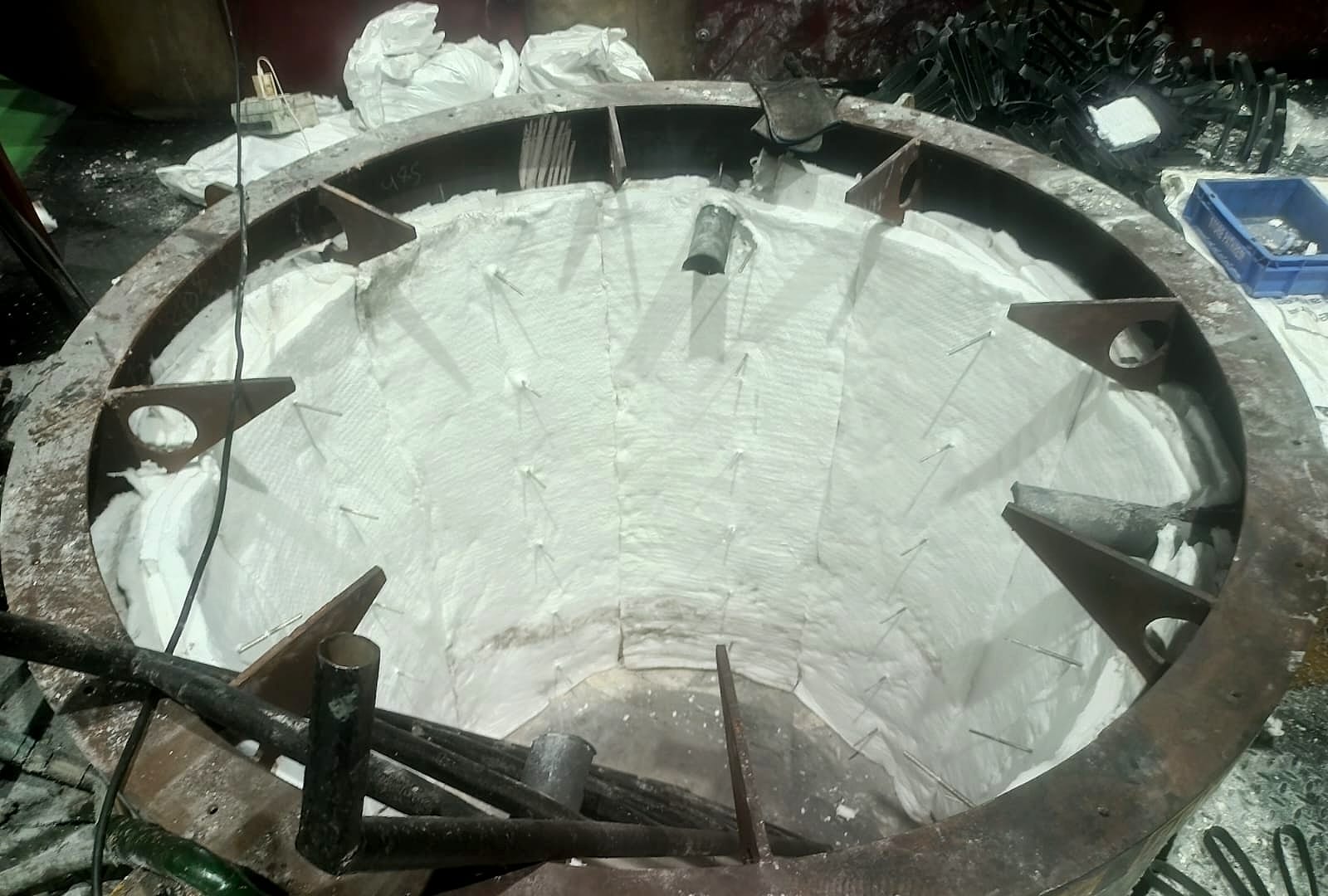
      The pit was stripped and a ceramic fibre blanket laid against the shell as the back-up layer behind the new hot face.

      Ceramic fibre blanket laid against the furnace shell as back-up insulation
      Back-up layer
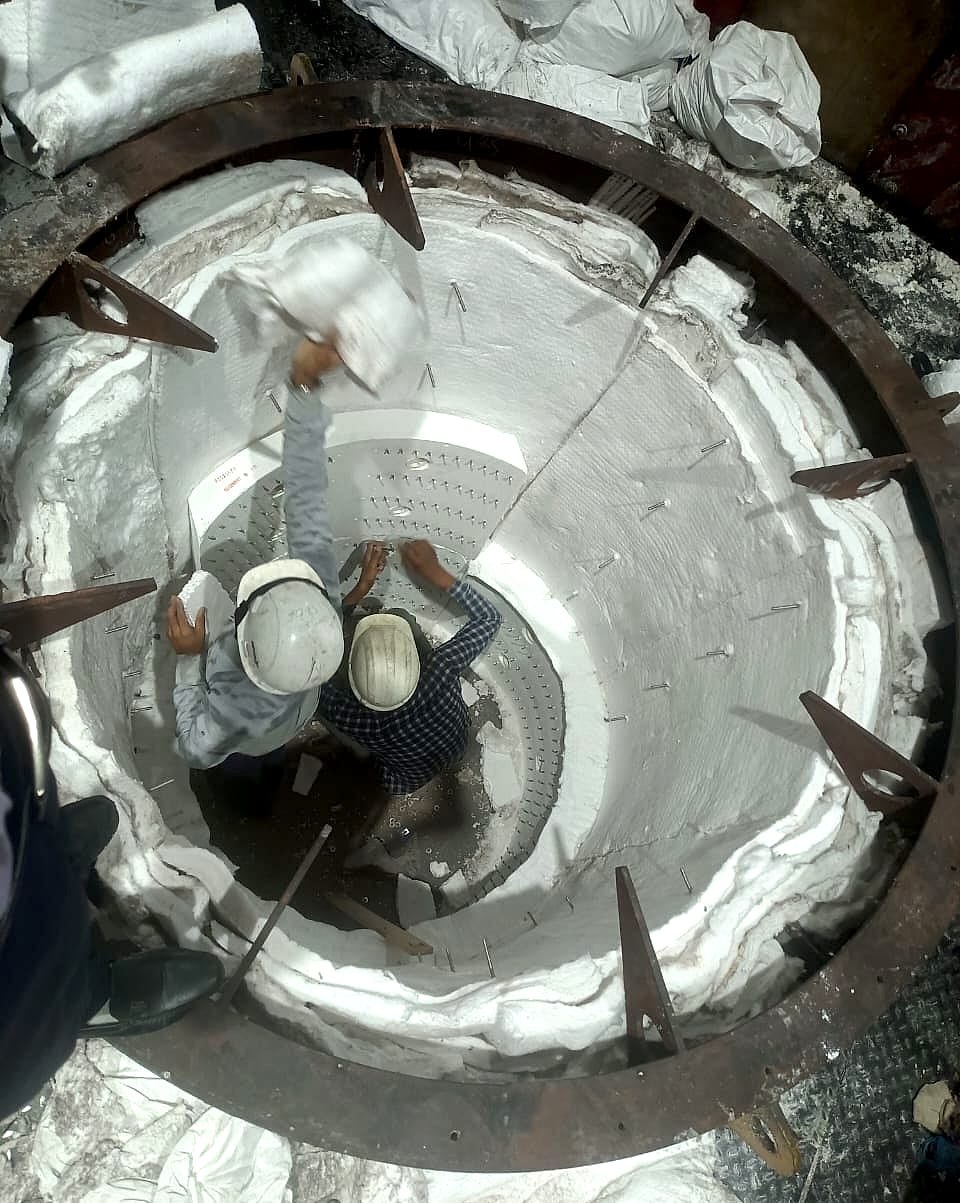
      Technicians working inside the pit during the relining
      Installation
    3. 03

      Fibrothal modules fitted

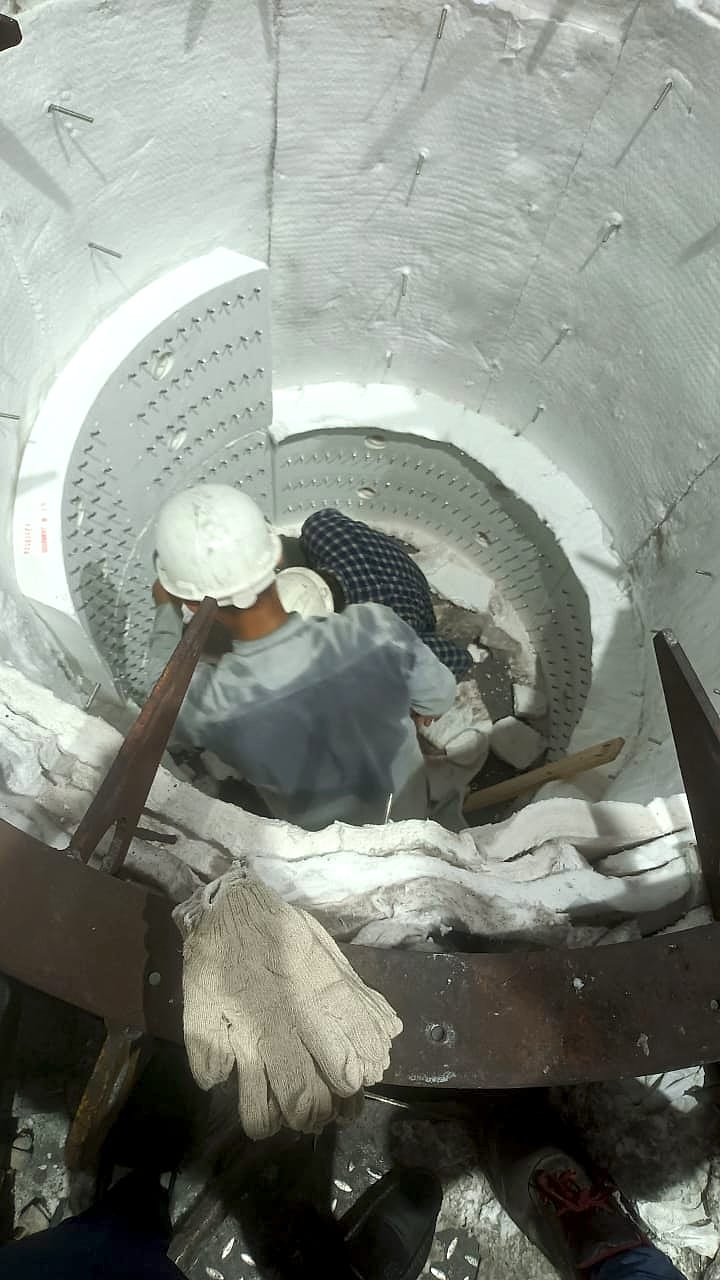
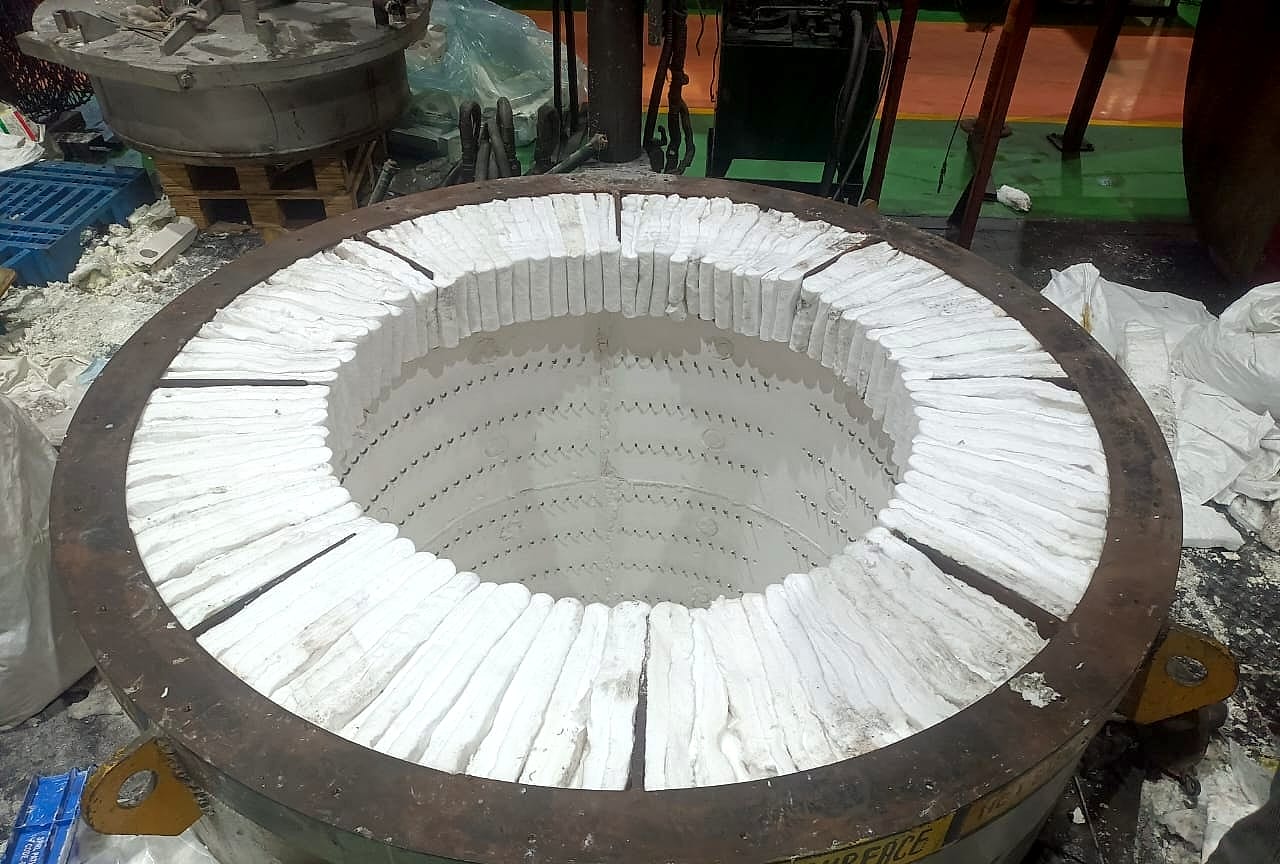
      Pre-shaped Fibrothal modules, with the elements already in them, were fitted ring by ring to form the hot face.

      A technician fitting Fibrothal modules inside the pit
      Installation
      Fibrothal modules in place around the top of the pit
      Fibrothal
    4. 04

      ROB elements at line voltage

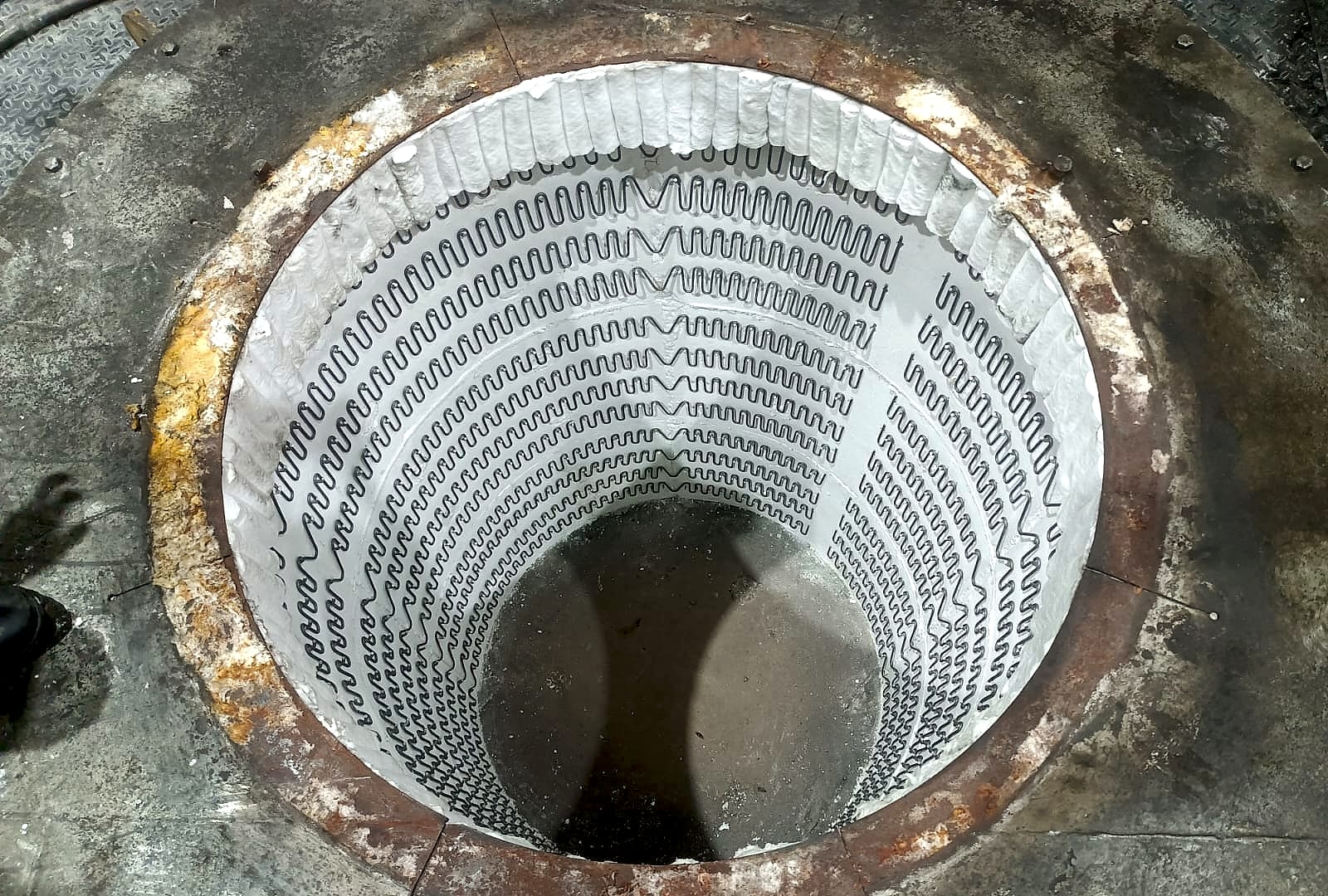
      The ROB wire elements line the hot face, designed to run at line voltage so no transformer is needed.

      Finished Fibrothal hot face with rows of ROB wire elements
      ROB elements
      The completed Fibrothal heating system seen from the top of the pit
      Completed
    5. 05

      Commissioning

      The furnace was commissioned in 2026 and runs at 920 °C, with a maximum of 980 °C.

      The furnace pit glowing at operating temperature after the retrofit
      At temperature

    Outcome

    What the new heating system brings.

    No transformer losses

    Line-voltage ROB elements remove the transformer's copper, hysteresis and eddy-current losses, about 2.5–3%.

    Less to maintain

    No transformer oil filtration, dielectric or acidity tests, or capacitor-bank monitoring.

    A lining that keeps its shape

    Fibrothal shrinks under 1% (against more than 2.4% for ceramic fibre modules) and doesn't recrystallise or sag.

    Energy saving

    10–12% expected from a Fibrothal hot face with ceramic fibre back-up, compared with an all-module lining.

    Faster heating

    ROB elements carry 4–4.5 W/cm² at 1000–1050 °C, against 2.5–2.6 W/cm² for strip elements.

    Less downtime

    Pre-shaped modules install quickly, and their longer life means fewer breakdowns.

    How does Fibrothal compare with brick and ceramic fibre?

    Weight, life, curing time, downtime and more, side by side, plus why ROB elements outperform strip elements.

    Start a project

    Have a furnace to modernise?

    Share your load, temperature and cycle time. Our engineering team will reply within two business days.

    Discuss your project

    We reply within two business days.